October 5th, 2015
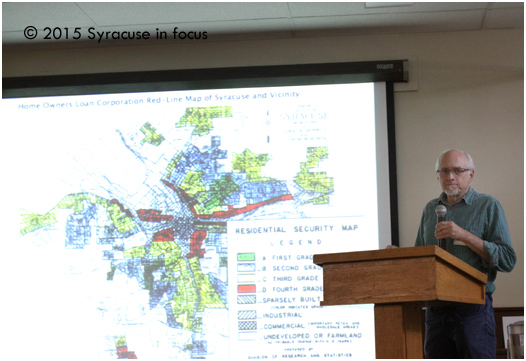
SUNY-ESF Professor Matthew Potteiger talked about the some of the historical roots of food injustice during a lecture he called “Framing & Visualizing Food Systems.”
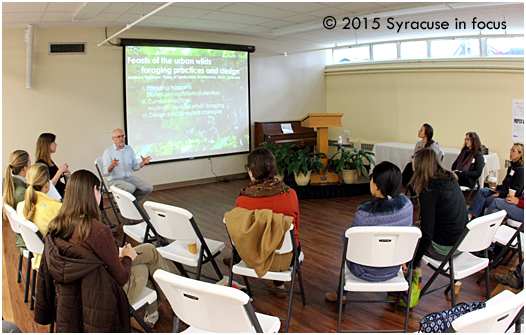
Later Potteiger teamed with Dr. Carolin Mees to talk about Using Buildings to Support Food Production and Community Engagement at the Syracuse Food Justice Symposium.
Tags: 2015, History, Matthew Potteiger, SUNY-ESF, Syracuse Food Justice Symposium
Posted in Politics | 1 Comment »
October 5th, 2015
For all those who think that contemporary Detroit doesn’t matter, here’s a conversation with Malik Yakini, a man who is helping turn the former factory town into a farm town. He visited Syracuse for the Food Justice Symposium. The meeting explored taking back health through urban agriculture and community gardens.
Tags: 2015, Detroit, Farming, Malik Yakini, SIF Conversations, Syracuse Food Justice Symposium, Urban Transformation
Posted in Politics | No Comments »
October 3rd, 2015
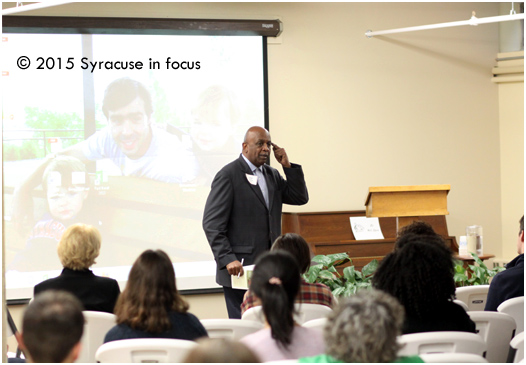
On Friday we got more information about Helping Hands Urban Farm, an initiative headed by Mike Atkins. The projects works with at Dr. King School, which is located in an area of Syracuse identified as a food desert.
Tags: 2015, Farming, Food, Mike Atkins, Syracuse Food Justice Symposium, Urban Food Desert
Posted in Politics | No Comments »
October 3rd, 2015
Dr. Joe Nimeh discussed his medical research and his gardening experience during the Syracuse Food Justice Symposium.
Tags: Food, Joe Nimeh, Public Health, SUNY Upstate Medical Center, Syracuse Food Justice Symposium
Posted in Science | No Comments »
October 3rd, 2015
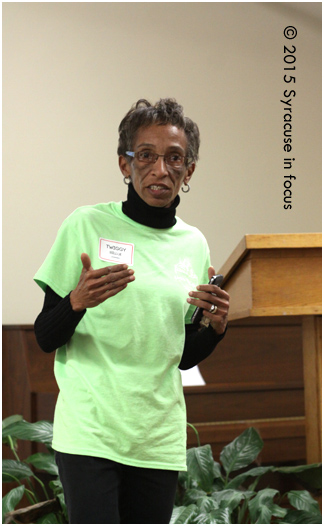
Twiggy Billue of the Syracuse’s SW Community Farm talked about growing local food during yesterday’s Syracuse Food Justice Symposium. She is scheduled to speak later today about Engaging Youth thru Community Farms and Gardens.
Tags: 2015, Activism, Farming, SW Community Farm, Syracuse Food Justice Symposium, Twiggy Billue
Posted in Politics | No Comments »
October 2nd, 2015
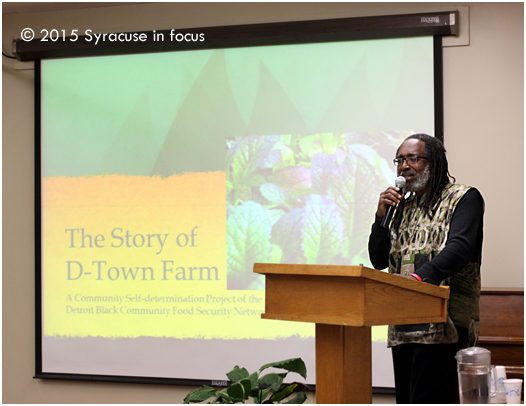
Malik Kenyatta Yakini, Director, Detroit Black Community Food Security Network
Activist, educator, musician and food entrepreneur Malik Yakini was the keynote speaker for Day 1 of the Syracuse Food Justice Symposium tonight. He spoke about values of justice and equality as it relates to urban farming and the human side of sustainability. The event was held at All Saints’ Renewal Center.
Our interview with Yakini will appear soon.
Tags: 2015, Community Food Security, Detroit, Farming, Food, foodpreneur, Malik Yakini, Sustainability, Syracuse Food Justice Symposium, Urban Food Desert
Posted in Politics | No Comments »
September 29th, 2015
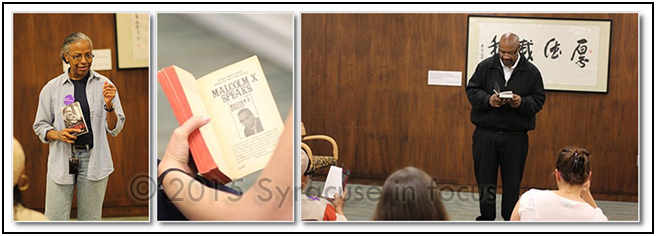
The Syracuse University event for the 4th Annual Community Read-Out (Black & Banned) was held at Bird Library. The event was organized by Professor Dr. Joan Bryant (far left).
We wonder what would have surprised Malcolm X (aka El-Hajj Malik al-Shabazz) more, the fact that his autobiography was banned and called a “crime manual” in Jacksonville FL, or that 50 years later a marathon community reading about his life would be held at Syracuse University (SU). For the next two days additional readings of The Autobiography of Malcolm X (as told to Alex Haley) will be held at Onondaga Community College and Beauchamp Public Library.
The Autobiography was a great choice for Banned Books week on many levels, but most important, Malcolm X’s story speaks to the heart of the American experience. For further exploration of his legacy, we also recommend this book by Rondell Collins.
Interestingly, one year before the book was published, Malcolm was interviewed by writer Al Balk, who later became a professor at SU’s Newhouse School.
Tags: 2015, Al Balk, Bird Library, Black & Banned, Black Syracuse Project, Books, El-Hajj Malik al-Shabazz, Joan Bryant, Malcolm X, Read-Out, SUNY OCC
Posted in Media | No Comments »
September 28th, 2015
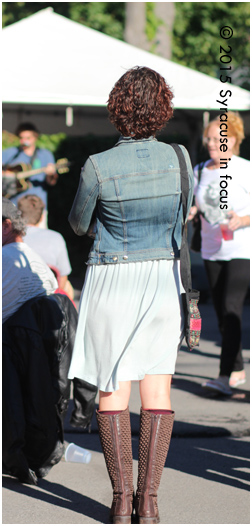
Fall: Boot Standard Time
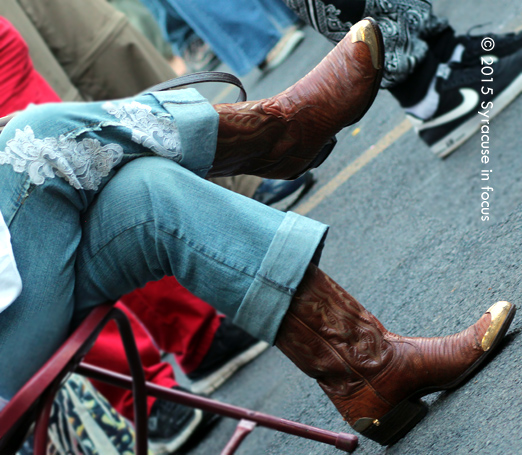
Fashion Statement in Footwear
Tags: 2015, Boots, Fall, Fashion, Street Photography, Syracuse
Posted in Fashion | No Comments »